
A per-vendor map of every dollar in your plan. Disclosed, undisclosed, footnoted.
A per-vendor map of disclosed and undisclosed compensation flowing through your plan, delivered in three weeks. Most clients see their program for the first time when they open it.
A forensic study of the money already flowing through your plan.
Your Form 5500 is a useful starting point. It captures the disclosures the law requires. It tells you what the broker reported and what the carrier reported. But it was built to satisfy a filing requirement, not to give employers a full view of the economics behind their plan. There’s more happening below that surface.
The Commission Transparency Report goes deeper. We help you value the services each of your vendor partners, carriers, and brokers provides, and weigh those services against the compensation they receive. The goal isn’t to second-guess your partners. It’s to put a clear, sourced picture in your hands so you can act on it as a fiduciary, with a full understanding of what’s being paid and what’s being delivered.
What you get back is a layered, footnoted view of the dollars in motion. Disclosed commissions. Reconciliation gaps. Override and contingent arrangements. Discrepancies between scope and services. Whatever the 5500 shows, this report shows the rest — the first step toward an optimized plan, and the foundation for every decision that follows.
Anonymized samples from real CTR work.
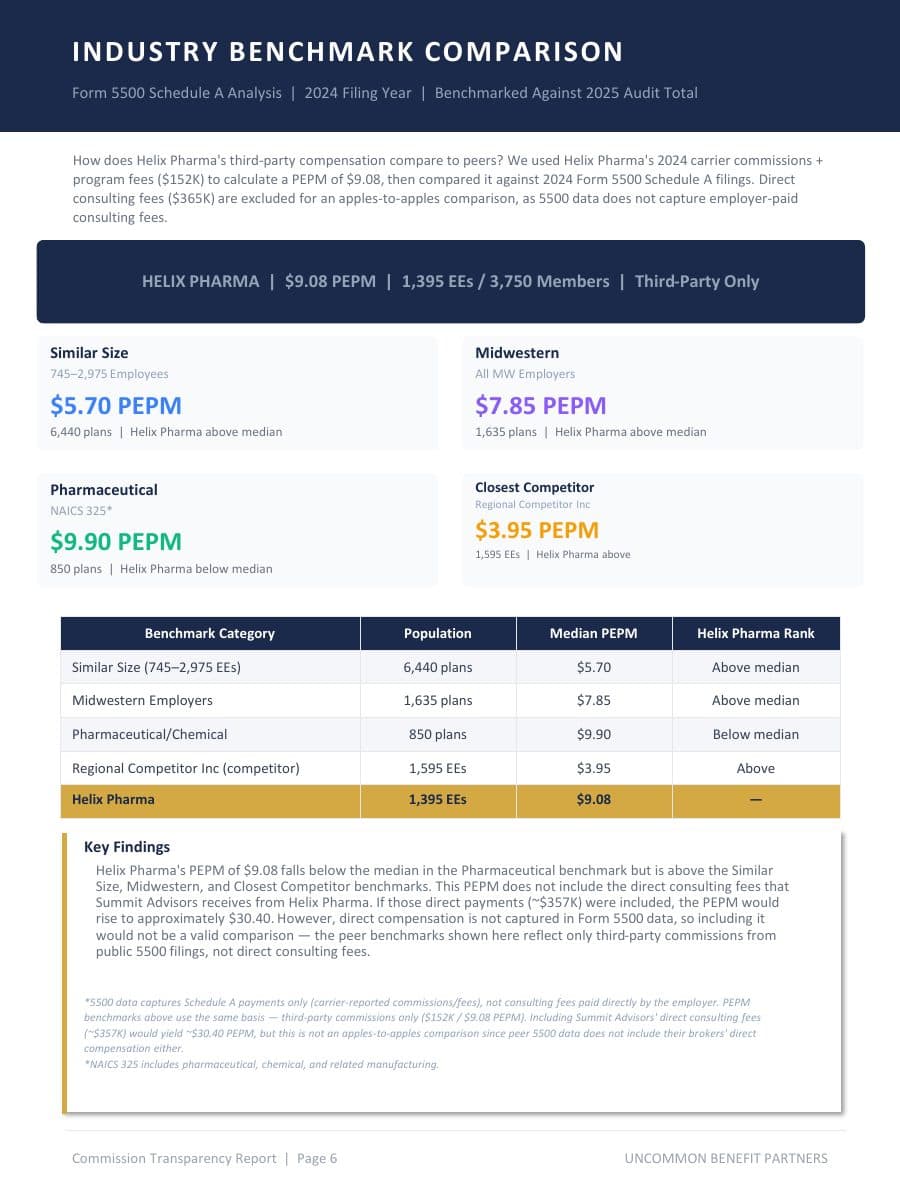
Reviewed against Form 5500 filings for one BAM client. Surfaced approximately $100K in previously unreported compensation, plus a ~$150K reporting discrepancy between broker-reported and carrier-reported figures.
Brokers, consultants, carriers, and third-party vendors mapped in a single report, every entity that touches a dollar of plan compensation.
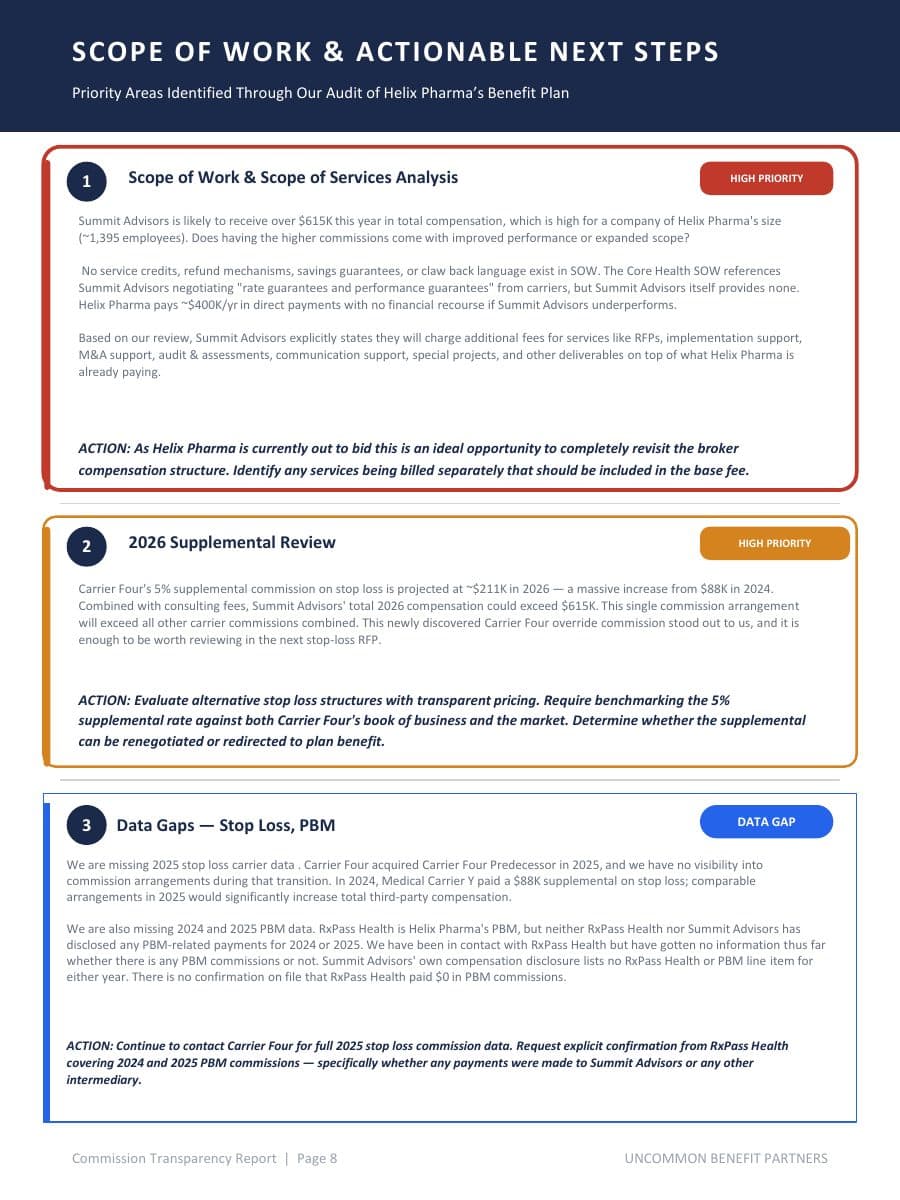
Direct commissions, override agreements, contingent payments, persistency bonuses, and revenue splits, all reconstructed and footnoted.
A glimpse of the deliverable. The rest is a conversation.
These pages come from a real Commission Transparency Report, fully anonymized. Every CTR is built around one plan’s specific vendors, contracts, and compensation arrangements, so we don’t publish full reports. We’d rather walk you through one of our anonymized reports.
Request a sample, and we will take you through a complete report, page by page, and what one would surface for your plan.

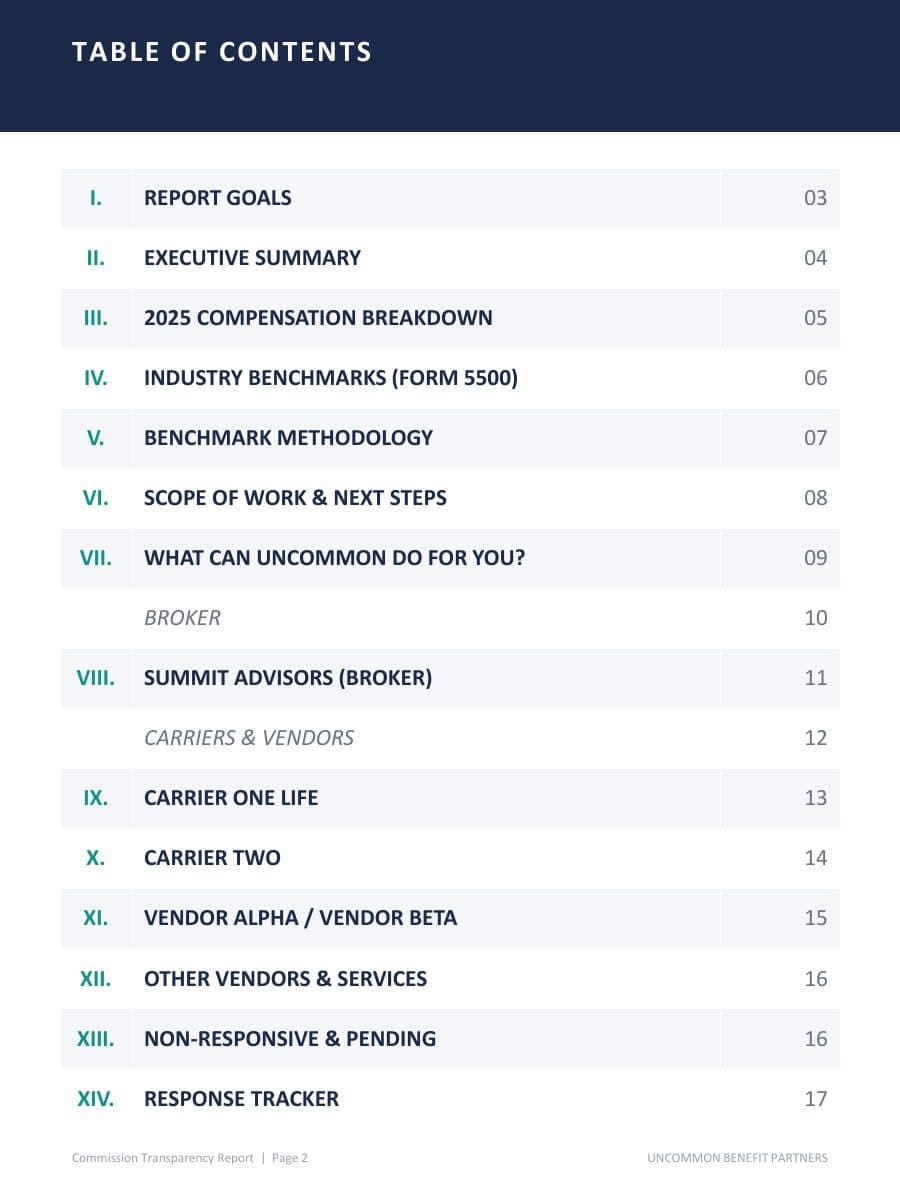
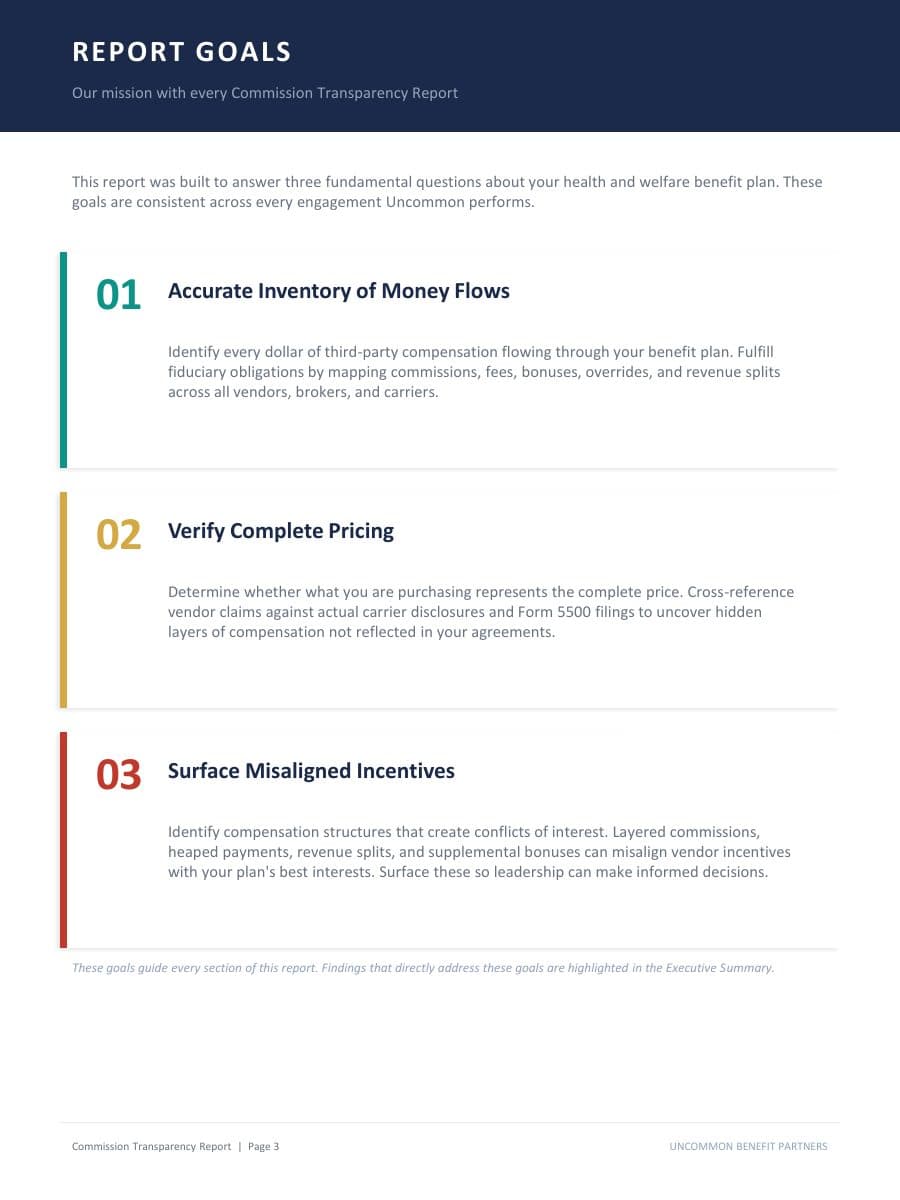
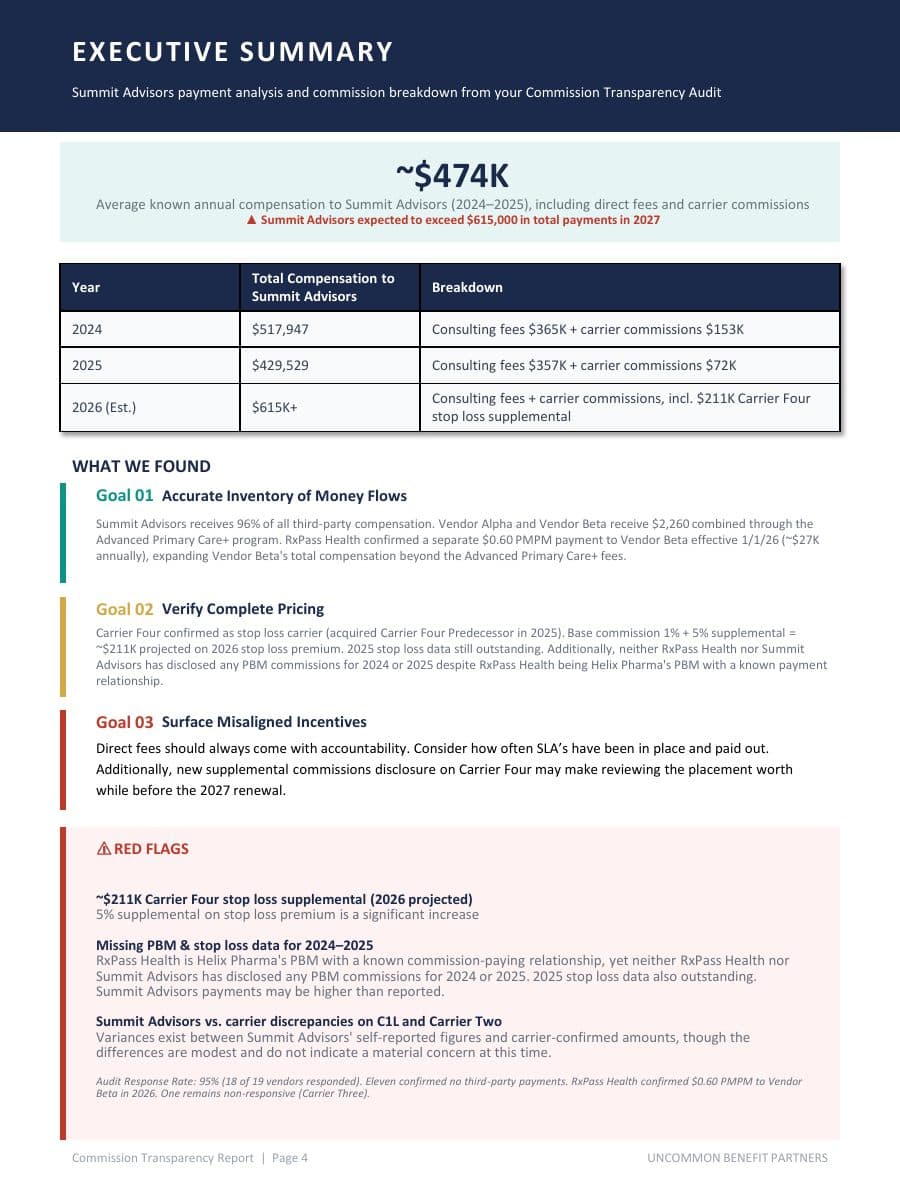
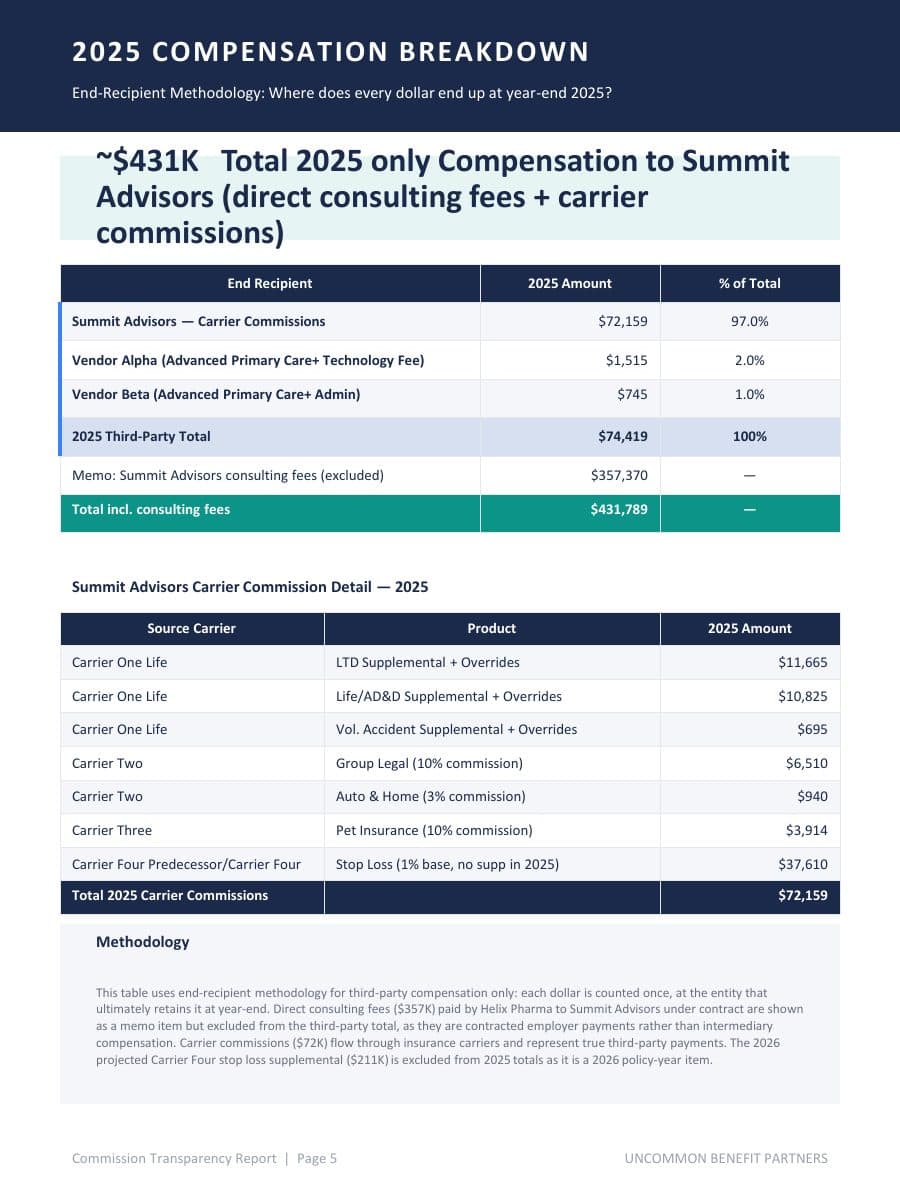
What we find changes how you think about your benefits.
A Commission Transparency Report maps every dollar flowing through your plan, disclosed or not. The excerpt on the right is from one engagement: four vendor lines, broken out by what made it onto the Form 5500 and what didn’t. Most of our clients see their program for the first time when they open it.
| Vendor | Disclosed | Hidden |
|---|---|---|
| Stop-loss carrier | $1.2M | $840K |
| Pharmacy (PBM) | $3.4M | $1.7M |
| Wellness TPA | $420K | $310K |
| Network admin | $2.1M | — |
| Total undisclosed | $2,850,000 |
From contract to clarity in under 30 days.
The Commission Transparency Report (CTR) typically lands within the first month, before you’ve signed any long-term contract.
Document review
Plan documents, carrier contracts, broker engagement letter, 5500 filings, Schedule A and C disclosures.
Carrier outreach
Formal information requests to each carrier asking for compensation disclosure.
Reconstruction
AI-augmented reconstruction of disclosed numbers, reconciliation gaps, override agreements, and contingent commission triggers. Structured analysis, so no data points are missed. A human reviews every figure.
Findings report
What we know. What we’ve estimated. What’s still opaque and why. The math, the source for each number, the methodology footnoted.
The CTR is a high-trust engagement.
Every report is tailored to the specific plan in front of us. Clients share carrier contracts, vendor agreements, and years of 5500 history under NDA, and we hand back a highly specialized read on their program. Most engagements begin with a referral from an attorney, a CFO, or another benefits leader.
- Fortune 500 benefits leaders
- CFOs evaluating advisor spend
- General Counsel evaluating fiduciary risk
- ERISA attorneys